Why does a Bayonne tree need careful picking?
Bayonne is a narrow peninsula with Newark Bay on one side, Upper New York Bay on the other and the Kill Van Kull at its tip. That means wind with little to slow it, salt spray near the shoreline, and a lot of filled land. Much of the waterfront and lower-lying parts of the city were built up on fill, and Hurricane Sandy in 2012 showed how quickly saltwater can reach those blocks. Trees planted here need to tolerate salt, wind and soil that may be compacted, rubbly or wet.
Space is the other limit. Rear yards behind the city's two-family homes are often small, close to the house and boxed in by fences, garages and the neighbor's yard. A tree that gets eighty feet wide will be a problem within twenty years. We look for trees that fit the space they will have at maturity, not just the day they go in the ground.
Which trees do well here?
- Thornless honeylocust. Light, filtered shade and good salt and drought tolerance. Small leaflets are easy to clean up.
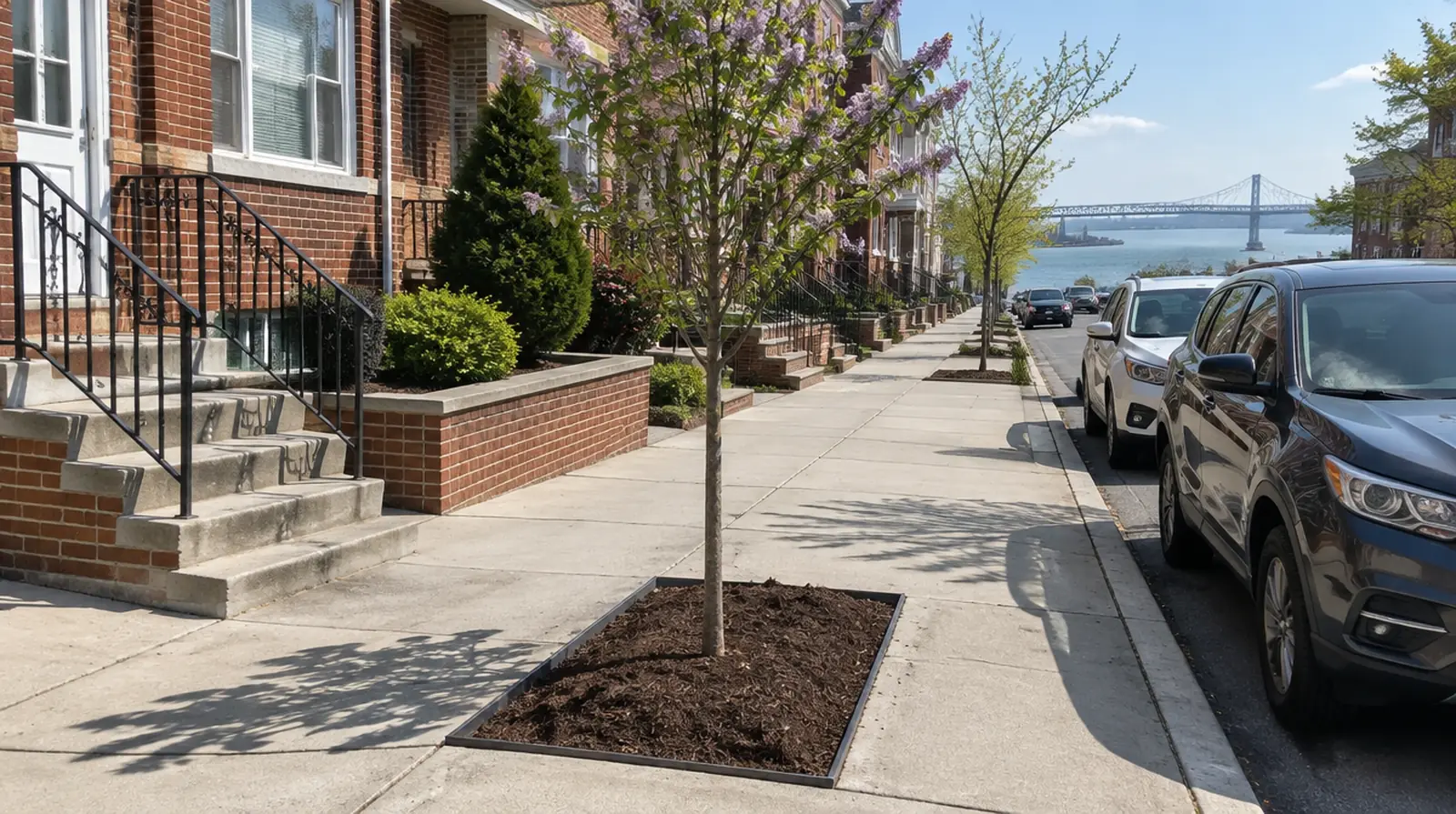
- Japanese tree lilac. A small tree with white flowers in early summer that suits tight yards and sidewalk pits.
- Swamp white oak. For larger spaces with wetter ground. Long-lived and sturdy in wind.
- Male ginkgo. Tough in urban conditions and pollution. Male trees avoid the smelly fruit.
- Eastern red cedar and American holly. Native evergreens that handle shore conditions, and good for screening.
- Serviceberry. A small native tree with spring flowers, summer berries for birds and fall color.
We usually steer people away from Callery pear, which splits apart as it matures, and from silver maple and Norway maple, which grow too large for most lots and push roots into walks.
Where should it go?
Before digging, we check what is overhead and underground. Look up for utility lines, and keep tall species away from them. Below ground, gas and water service lines and sewer laterals often run right through the front of the lot. We contact the state's one-call utility marking service before any digging. We also keep new trees a reasonable distance from foundations, garages and shared fences, since roots and limbs both spread with age.
The strip between sidewalk and curb is a special case. A tree there is generally considered a city street tree, so check with the City of Bayonne before planting in it or removing an old one. We are happy to help you figure out who to ask.
How do we plant it?
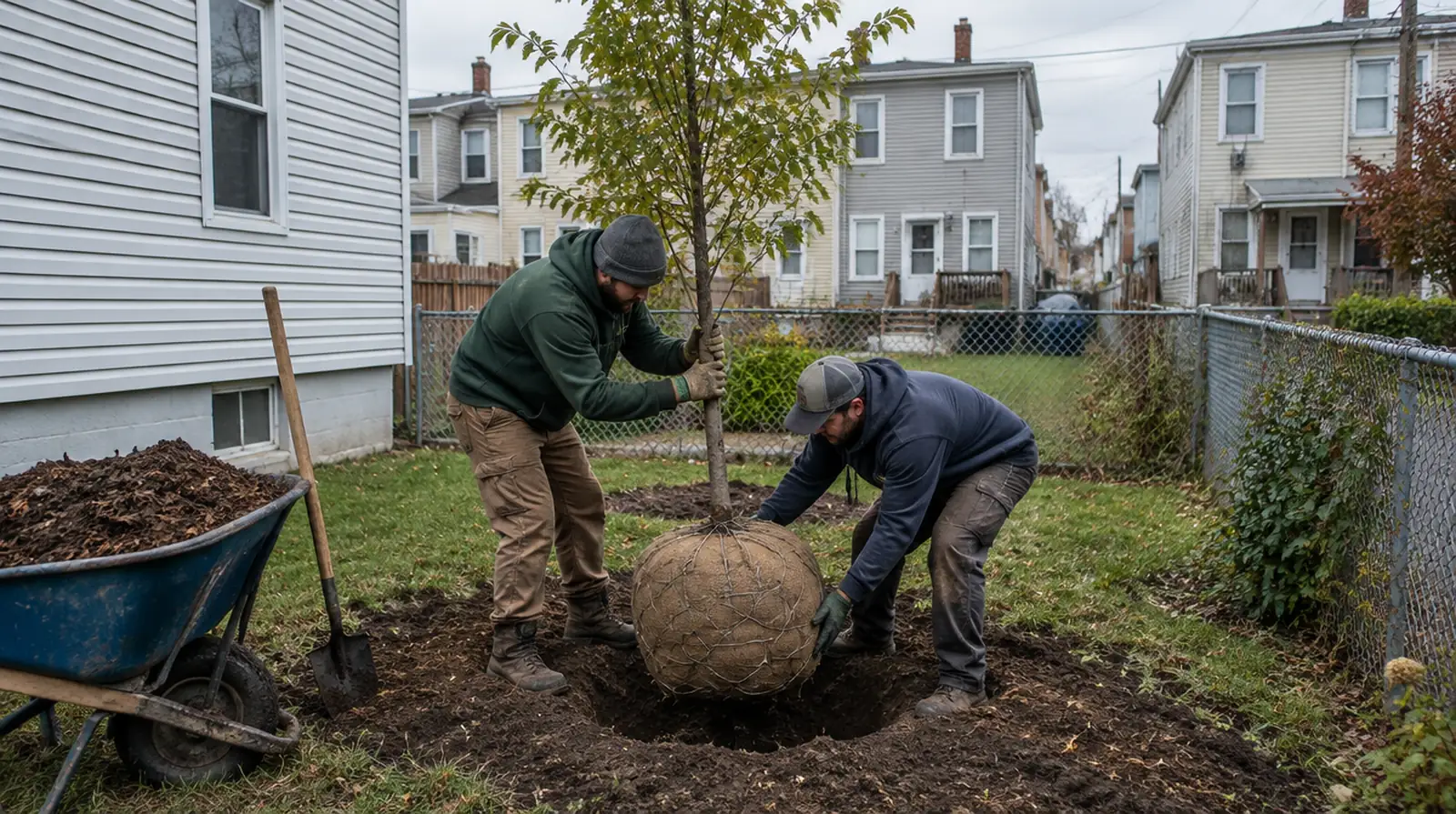
Most failed trees we see were planted too deep. We find the root flare, the spot where the trunk widens into roots, and set it level with or slightly above the surrounding grade. The hole is dug two to three times as wide as the root ball but no deeper. Burlap, twine and wire baskets are cut away from the top of the ball. Fill soil and rubble from old foundations, which is common on city lots, gets removed from the hole and replaced with a decent soil mix. We water as we backfill to settle out air pockets.
Next comes a ring of mulch two to three inches deep, kept a few inches away from the trunk. Stakes are used only when needed, such as on very windy, open sites, and come out after the first year.
When is the best planting time?
Fall is ideal here. Cooler air with still-warm soil lets roots grow before winter. Early spring, before leaves open, is the second-best window. Summer planting is possible with extra watering, but heat stress is harder on a new tree.
What happens after planting?
Water is the biggest factor in the first two years. A new tree needs a deep soaking about once a week in dry spells, more in summer heat. We show you how much water to give and how to check the soil. A light structural pruning after a few years helps the tree form one strong leader instead of the weak forks that cause trouble later.
Tree planting questions
Can you plant a replacement where a tree was removed?
Often, yes. The old stump and roots should be ground out first, and we usually shift the new tree a few feet to reach fresh soil.
What size tree should I start with?
Smaller nursery trees often establish faster and catch up to larger ones within a few years. We will suggest a sensible size for your spot.
Have a spot that needs a tree?
Call us. We will look at the space, suggest a few species that fit, and give you a clear quote.
(201) 581-0478