What an assessment covers
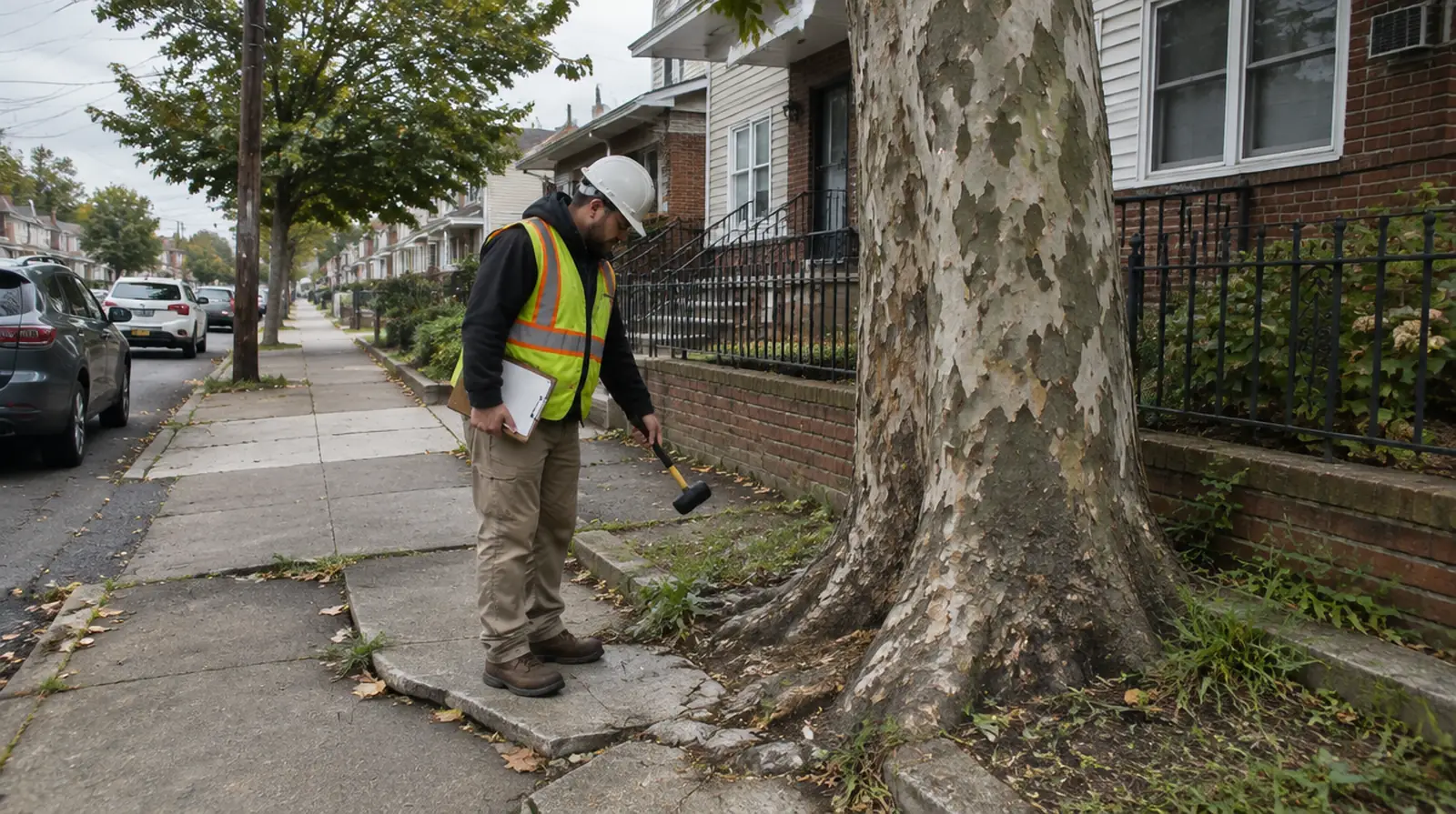
A visit starts with your concern, whether that is a tree dropping limbs, leaves browning early, a lean that seems worse, or roots lifting the sidewalk. From there we look at the whole tree:
- Crown. Dead wood, thinning, leaf color and size, weak branch unions and storm damage.
- Trunk. Cavities, cracks, cankers, fungal growth and hollow sound when tapped with a mallet.
- Root zone. Girdling roots, soil grade changes, paving over roots and signs of rot at the base.
- Site. What the tree could hit if it failed: the house, a neighbor's roof, cars, wires or the sidewalk.
You get a clear explanation of what we find, with options ranging from no action and monitoring to pruning, cabling, soil care or removal.
Salt, wind and storms
Bayonne is bordered by Newark Bay, the Kill Van Kull and Upper New York Bay, so salt reaches trees on the wind and, during big storms, through flooding. Hurricane Sandy in 2012 brought down and uprooted trees across the city, and many survivors were weakened by saltwater sitting around their roots. Salt stress shows up as scorched leaf edges, early leaf drop and branch dieback, sometimes years after the event. Road salt from winter adds to it along busy streets. We look for those patterns and recommend species and care that hold up better near the water.
City trees in tight spaces
Many Bayonne homes are two-family houses and row houses on narrow lots, with a tree in a sidewalk pit or a small front yard. London planes, Norway maples, pin oaks, honey locusts and Callery pears are common. Each has its issues. Callery pears, for example, tend to split at their crowded branch unions as they age, while London planes and Norway maples often heave sidewalks and crowd foundations. An assessment helps you decide whether a tree can be managed with pruning or root work, or whether it has outgrown its spot.
Trees in the public right-of-way are under city rules, and Bayonne's tree code restricts unauthorized cutting or injury to public trees. If a tree in front of your house is the problem, we tell you whether it appears to be on city property and who to contact before anything is done.
Spotted lanternfly and other pests
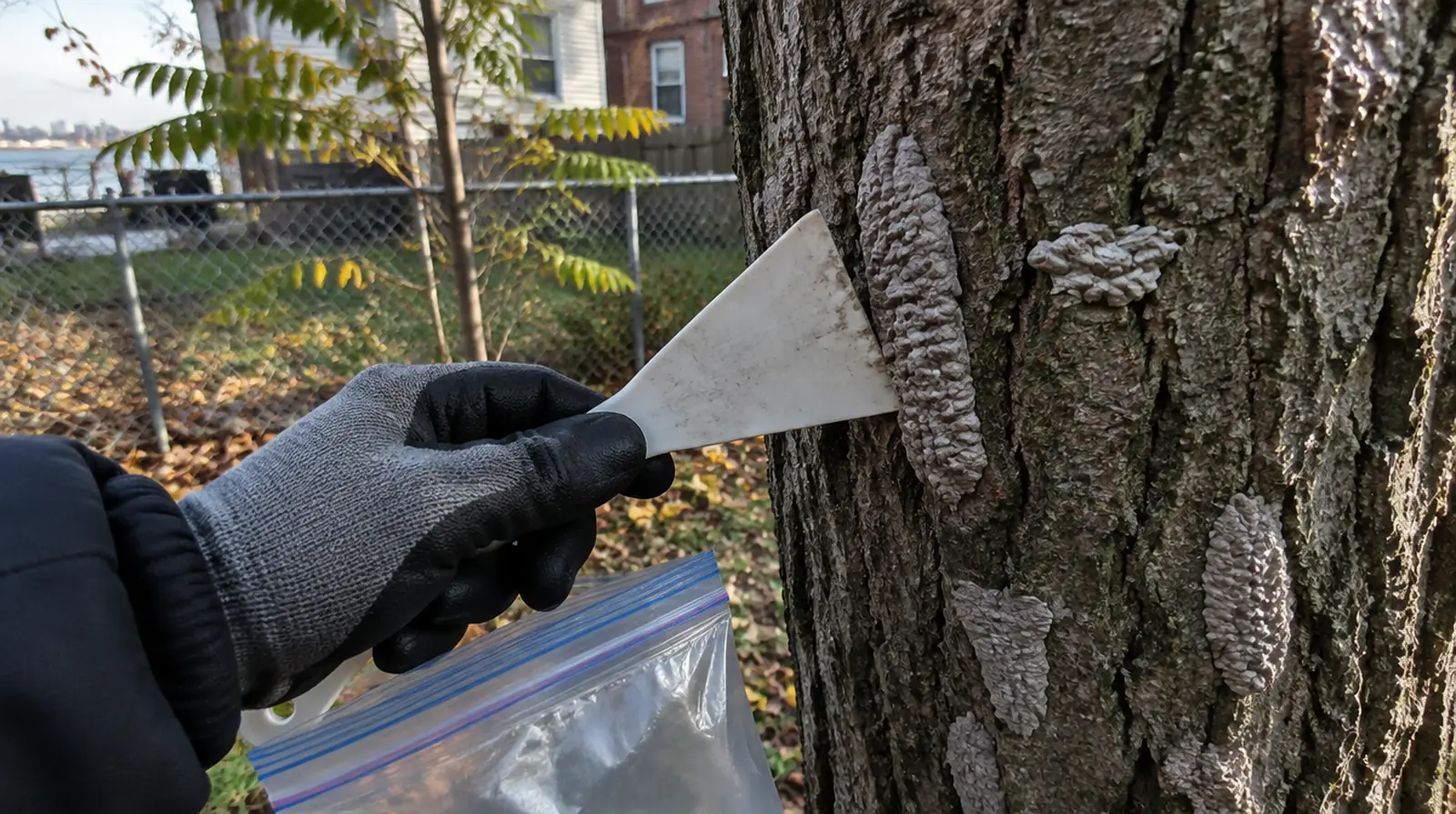
Spotted lanternfly is now established across much of New Jersey, and the state asks residents to destroy them on sight. In Bayonne the insects concentrate on tree of heaven, which grows in alleys, fence lines and vacant lots, but they also feed on maples and other yard trees. During an assessment we check for adults, nymphs and the mud-like egg masses on bark, fences and outdoor furniture, and we look for honeydew and black sooty mold on leaves and surfaces below.
We also look for scale insects, borers, leaf diseases, and decay fungi such as conks and mushrooms at the base of the trunk, which often point to internal rot.
Before you remove a tree
Removing a healthy tree costs money and gives up shade that is hard to replace on a crowded block. An assessment often shows that targeted pruning will solve the problem. When removal is the right call, we explain why and handle it with our tree removal crew, followed by stump grinding if needed. For a large tree with a weak split, cabling and bracing may let you keep it safely.
When to call
- After a storm, if limbs broke or the tree shifted.
- If mushrooms, cracks or cavities appear on the trunk or roots.
- If leaves turn brown or drop early year after year.
- Before construction, a new driveway or a sewer line repair near a tree.
- When buying a home with large trees close to the house.
Common questions
Do you give written reports?
Yes, if you need one for a landlord, a neighbor or your own records, just ask when booking.
Can you tell if a tree is hollow?
Sounding with a mallet and probing give a good first read. Severe cases may need more detailed testing.
Worried about a tree in Bayonne?
Call (201) 581-0478 to book an assessment. We will look at the tree with you and explain the options in plain language.
(201) 581-0478